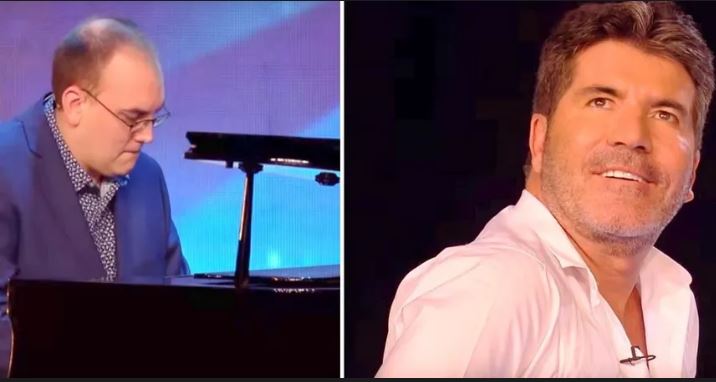
There is a specific body language that experienced talent show judges adopt when an audition has not yet given them a reason to pay full attention.
The slight lean back.
The neutral expression that is polite without being engaged.
The look of people who are present in the room without being fully inside the moment.
That was the panel when Nicholas Bryant began playing.
The opening was competent — recognizably Queen, played with genuine care and technical control.
But it was not the kind of opening that makes a judge sit forward, and nobody on that panel was sitting forward.
That changed the moment a sound came from entirely the wrong direction.
A violin — not from the stage, not from any speaker, but from somewhere inside the seated audience — entered the room and altered the atmosphere immediately.
The judges’ eyes moved.
The lean-back posture adjusted.
Across the panel, there was the shared expression of people whose expectations have just been interrupted by something they did not see coming.
Then a second instrument joined from a different part of the crowd.
Then a third.
Each addition produced its own small ripple of reaction — a new wave of understanding spreading outward from the point where another hidden musician had risen from their seat.
By the time the conductor appeared, the judges were no longer leaning back.
They were scanning the room, tracking the expanding performance with the focused attention of people genuinely trying to understand the full scale of what they are witnessing.
The moment when a panel that has quietly disengaged becomes visibly, completely invested is one of the most satisfying things a talent show can produce.
This audition produced it at exactly the right moment.
And the music that filled the room in the minutes that followed gave everyone in that building more than enough reason to keep listening.
