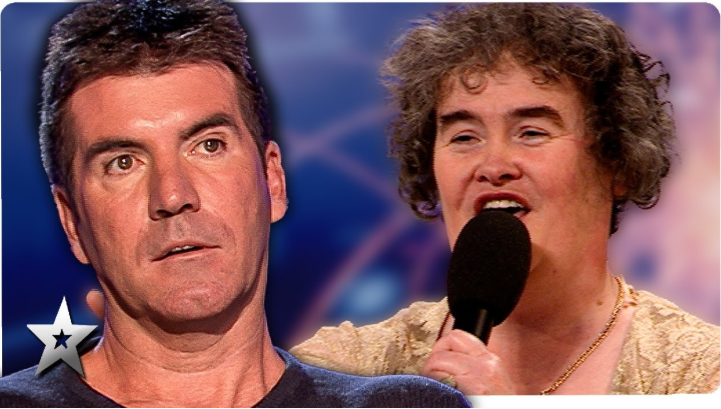
Most people know what happened when Susan Boyle walked onto the stage.
They’ve seen the clip, watched the judges’ faces transform, felt the emotion of that erupting standing ovation.
But the part of her story that rarely gets discussed — the part that actually explains everything — is the part that came before any of that.
Susan Boyle had been preparing for that moment for decades.
Not just in the weeks before the audition, and not just in the months leading up to her application.
In the years — the quiet, unwitnessed, undocumented years — she had spent singing in church halls, community performances, and small local events with audiences of a few dozen people at most.
She had been told, in various ways and by various people over the course of her life, that a professional career in music was simply not something that was going to happen for her.
She was too old.
She wasn’t the right type.
The industry wasn’t looking for someone who looked like her or came from where she came from.
But she kept singing anyway.
Not because she was certain that fame was coming, and not because she had a carefully constructed plan that she was confident would eventually work.
But because singing was the thing she loved most in the world, and she wasn’t prepared to surrender it simply because nobody was watching.
That persistence — quiet, unglamorous, and entirely unrecognized by anyone outside her immediate community — is the real foundation on which the viral moment was eventually built.
When people speak about Susan Boyle’s story as a source of inspiration, they almost always focus on the audition itself.
But the inspiration was never really in the audition.
It was in the years before it.
It was in every practice session that nobody filmed, every small performance that nobody shared online, every ordinary day that she chose to keep going when everything around her quietly suggested she should have already stopped.
The audition was simply the day the world happened to be watching.
The real story had been unfolding, without an audience, for a very long time before that.
And that, perhaps more than anything else, is the part worth actually remembering.
