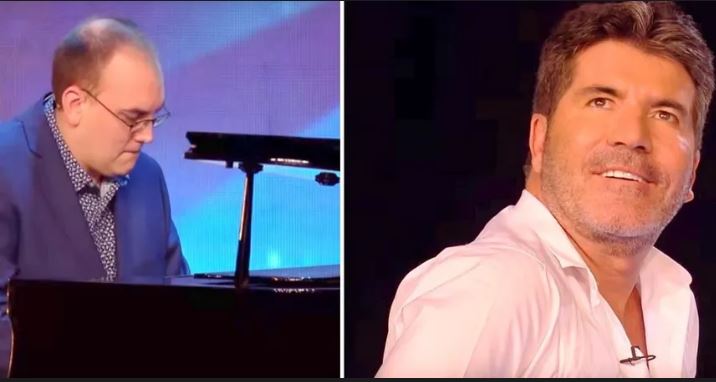
The piano playing was excellent.
Nicholas Bryant is a genuinely skilled musician, and anyone listening closely to the foundation of the performance would have found more than enough to appreciate in what he was doing technically.
But that is not why the clip traveled the way it did.
It is not why people sent it to their friends with messages that said things like “stop what you are doing and watch this right now.”
The piano was not the reason.
The reason was the moment of realization.
The specific, precise, shared instant when an audience that believed it was watching one thing understood that it had been watching something else entirely.
That moment — visible on the faces of audience members and judges alike, captured clearly on camera — is one of the most reliably powerful things a video can contain.
It is the human face in the unguarded process of being genuinely surprised.
Not mildly surprised.
Fundamentally, completely surprised — the kind that bypasses the practiced social response and produces something real before anyone has had time to decide how they should look.
People share that because they want other people to experience it.
Because watching someone else be surprised by something joyful produces a version of that same joy in the person watching.
It is one of the simplest and most consistent mechanics of content that spreads at scale.
And this audition triggered it with extraordinary precision.
Beyond the musical ambition and the logistical craftsmanship of organizing an entire hidden orchestra, the reason this moment traveled as far as it did was the faces.
The judges leaning forward.
The audience turning to look.
The room in the visible process of understanding something it didn’t understand thirty seconds before.
That is the performance that went viral.
The piano was just how it started.
