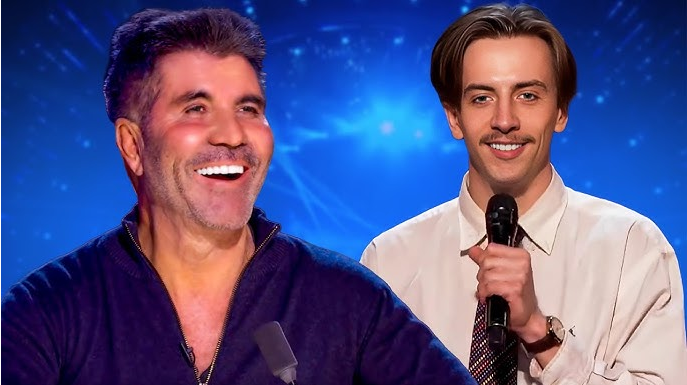
The first thing the performer said when he reached the microphone was that he was a karaoke singer.
It was a disarmingly honest introduction.
Not “I’m a professional vocalist” or “I’ve been training for fifteen years.”
Just — karaoke.
The judges heard it.
The audience heard it.
And without anyone saying a word, the room made a quiet collective calculation about what the next few minutes were likely to hold.
The opening of the performance did nothing to contradict those expectations.
It was familiar.
The kind of start that confirms what a room has already decided before it began.
Then the 60-second mark arrived.
And everything the audience thought they understood about what they were watching rearranged itself entirely.
The moment itself is genuinely difficult to describe without diminishing it.
Part of what makes it so remarkable is the precise way it catches the room off guard — not gradually, not with any warning, but all at once and with absolutely no mercy for anyone trying to maintain their composure.
One judge hit the buzzer.
Then another.
But not with the composed, decisive air of a panel reaching a clean professional conclusion.
With the energy of people who are no longer entirely in control of their own responses.
The audience by that point was already gone.
Some were laughing openly.
Some were covering their mouths.
Some had turned to the person next to them with the particular expression of someone who urgently needs to confirm that another human being is witnessing the exact same thing they are.
What happened in those 60 seconds is exactly why live television still exists.
It captures the moments no production team plans and no performer can manufacture on purpose.
