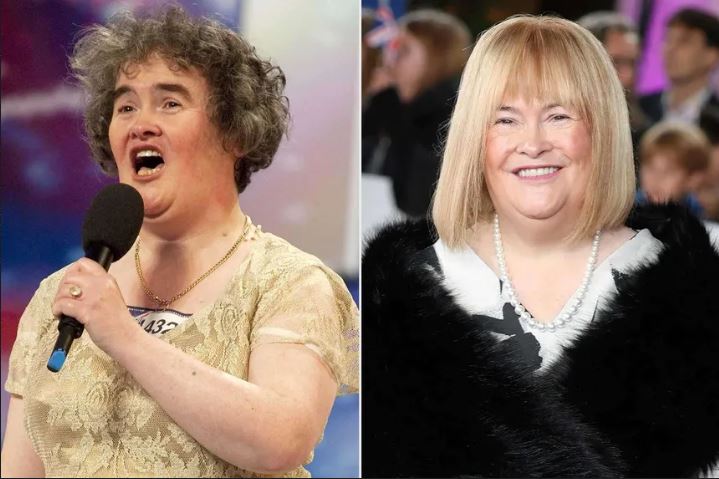
The song Susan Boyle sang that night was not a random selection.
“I Dreamed a Dream” is one of the most emotionally dense pieces of music in the entire history of musical theater.
It comes from Les Misérables — the legendary stage production based on Victor Hugo’s sweeping novel — and it is sung by a character named Fantine, a woman whose life has not gone the way she had hoped.
Fantine is a woman who once had dreams.
Who believed, early in her life, in the genuine possibility of a beautiful and fulfilling future.
And who, by the time she delivers those lyrics, has watched most of those possibilities disappear one by one.
The song is a lament — not angry, not bitter, but deeply and quietly heartbroken.
It is one of the most powerful expressions in the entire theatrical canon of the gap between what a life was supposed to become and what it actually turned out to be.
For Susan Boyle — a 47-year-old woman who had spent decades living on the periphery of the life she had always imagined for herself — the choice of that particular song was not incidental.
It was profoundly, specifically, unmistakably personal.
Every line of that lyric landed differently coming from her mouth than it would have coming from almost anyone else in that audition queue.
Not because of any theatrical technique or careful vocal embellishment.
But because even the audience, without knowing the precise details of her life story, could sense instinctively that she was singing something she understood from deep personal experience rather than from performance preparation.
There is a moment in the recording where her voice breaks very slightly on a particular phrase — not from technical failure, but from something that sounds like pure emotional truth surfacing through the performance.
That is the moment most people who have seen the clip identify as the one that actually made them cry.
Not the standing ovation.
Not the judges’ visible disbelief.
That specific, quiet, unguarded moment.
When you understand why she chose that song, the entire performance shifts in meaning.
It stops being a remarkable talent show audition and becomes something more intimate than that — something closer to a confession.
A woman, finally standing on a stage large enough to hold her voice, singing the most honest thing she knows how to say about the distance between where she is and where she had always dreamed she would be.
And somehow, in that distance, finding something powerful enough to move the entire world.
